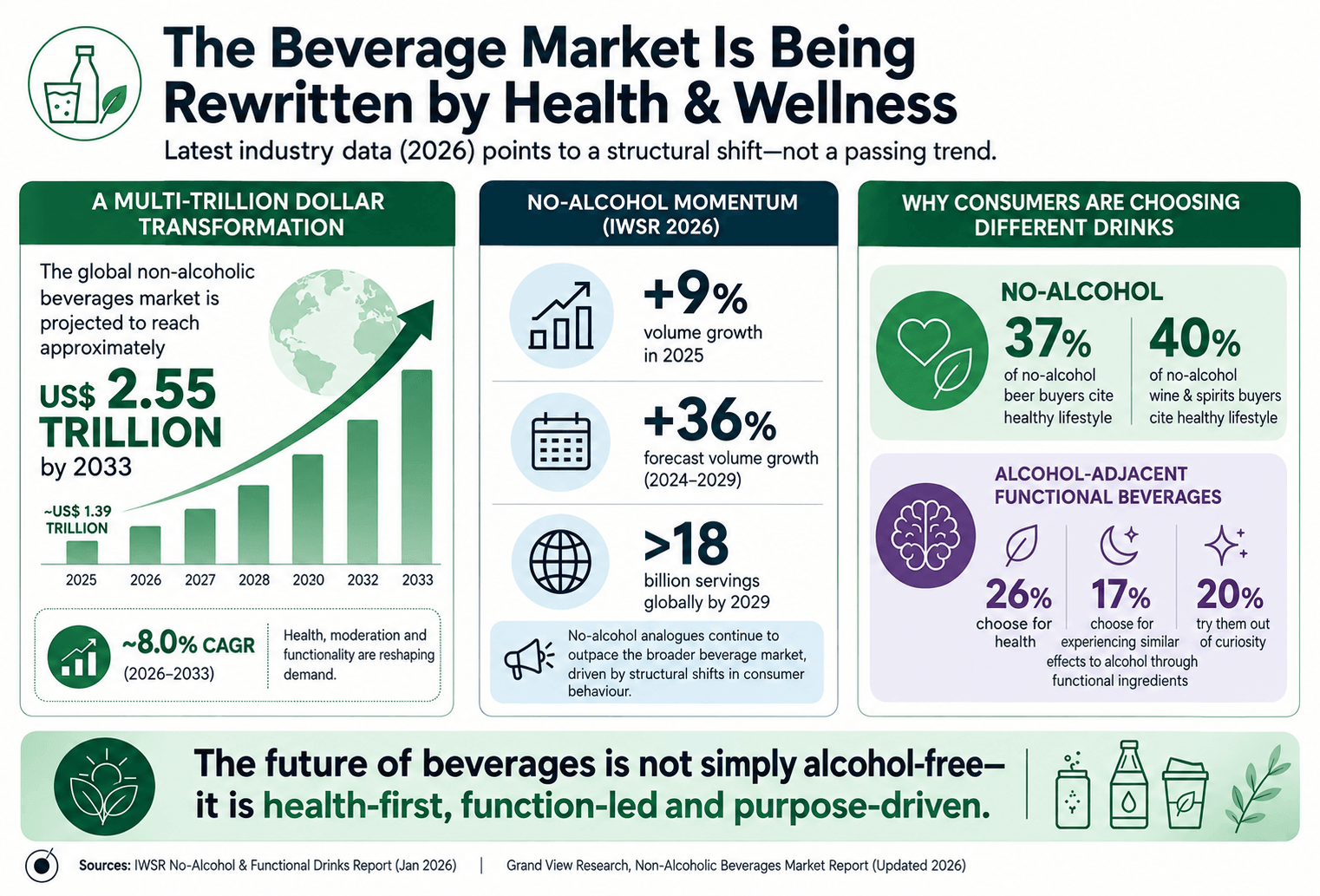
The global beverage market – a trillion-dollar ecosystem – is in the middle of one of the most radical structural shifts.
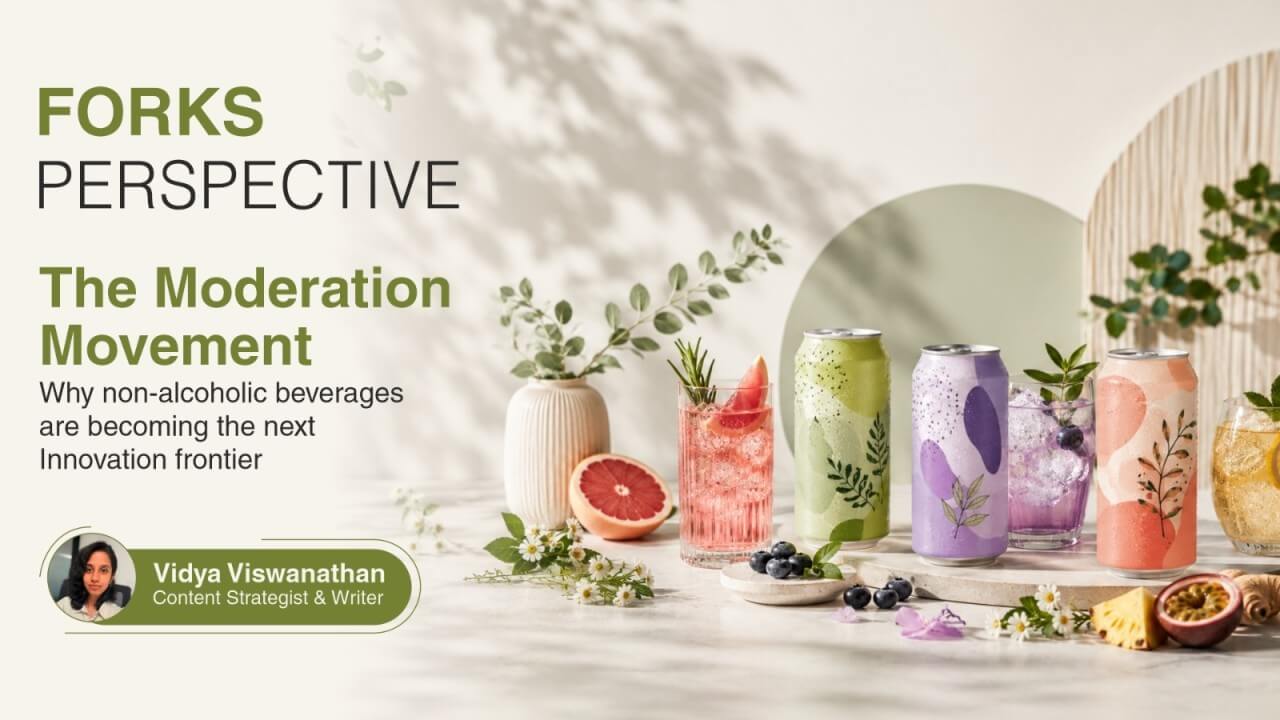
At Thinking Forks, we see the moderation movement for what it is: a recalibration of balance, not a retreat from indulgence.
It’s a category compounding faster than most of the beverage aisle around it.
The Shift: What’s Changing?
Consumers are unbundling the occasion from the substance. They are becoming increasingly intentional about when and why they drink.
Forbes’ read on this aligns with ours: consumers aren’t abandoning alcohol, they’re becoming more selective, reserving it for premium occasions while expanding their repertoire of alcohol-free experiences. Citing Numerator data, it notes that US beverage spending grew 4.4% overall, with non-alcoholic beverages growing 6.2% against just 2.4% for alcoholic ones – a clear signal of where the momentum sits.
- Health, sleep quality, mental wellbeing, longevity and productivity now shape beverage choices as much as flavour does.
- Attest’s 2026 research found energy is the #1 desired functional beverage benefit – cited by 60% of consumers in the U.S. and 56% in the U.K. – while taste, sugar content and scientific backing increasingly shape purchase decisions.
- Market insights from Innova captures “Mind Balance” trend, noting that consumers now routinely look to beverages for emotional and mental support. Stress relief, mood regulation, and cognitive focus are top priorities driving functional formulation.
- Across markets, one thing is clear: this is no longer about replacing alcohol. It is about redefining what consumers expect from a beverage altogether.
The 2026 Indian beverage market operates on a dual-engine model: consumers move between mass-market utility and premium, experience-driven wellness. Growing demand for functional, health-conscious beverages that retain familiar, locally relevant and indulgent flavor profiles is shaping category growth and innovation.
What’s Really Filling the Alcohol Moment
According to Mintel’s 2026 research, forward-thinking brands are finding opportunity not just in replacing alcohol, but in capturing the social and behavioural occasions once closely associated with it.
0% beer, wine and spirits remain the established starting point but they are no longer the whole story. A broader ecosystem of “alcohol-moment” alternatives is emerging:
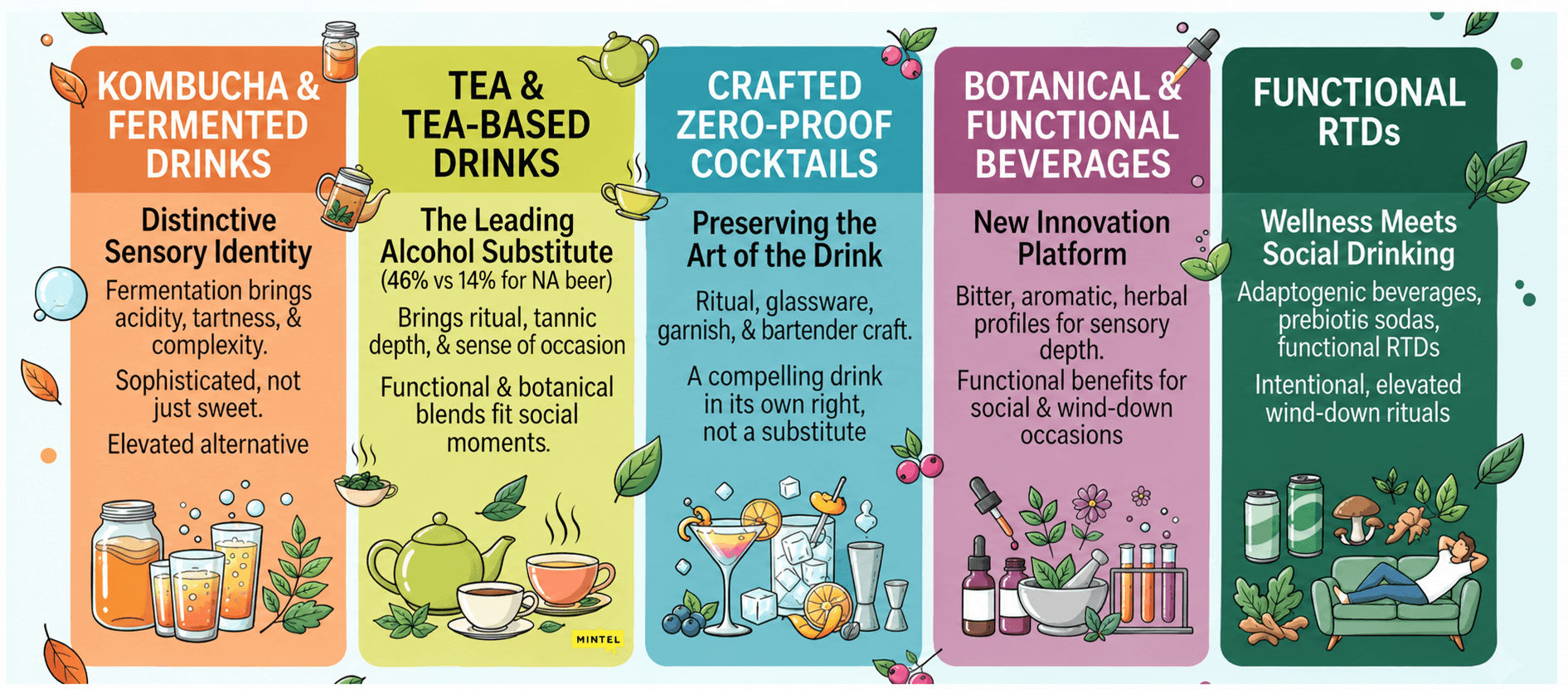
The bigger opportunity is clear:
Consumers aren’t simply looking for something to drink instead of alcohol. They’re looking for something to do the job alcohol used to do – relaxation, ritual, social connection and sensory reward.
What’s Driving Demand?
We observe three key drivers:
- First, wellness has gone holistic. Consumers expect beverages to support better sleep, stress management, cognitive performance, digestive health and emotional wellbeing — not just hydration.
- Second, moderation has become aspirational. Choosing a non-alcoholic beverage increasingly signals intentional living, not restriction. Consumers want drinks that belong in social rituals without compromising tomorrow’s productivity.
- Third, premium experiences now extend well beyond alcohol. Consumers are willing to pay for craft ingredients, sophisticated flavour architecture and functional benefit and they are doing it consistently.
Consequently, nootropics and adaptogens like L-theanine and ashwagandha, marine collagen, functional fungi like lion’s mane, pre/pro/postbiotics, and emerging longevity ingredients like colostrum and sea moss are moving rapidly into our recent formulation work.
Opportunities for Brands
Tomorrow’s winning beverages will compete on occasion design – building beverages for post-exercise recovery, cognitive focus during work, alcohol-free social evenings, hormonal health, healthy ageing and emotional wellbeing. Here is where we see the strongest opportunity:
- The “Zebra Striping” Target: non-alcoholic options built to visually and experientially match their alcoholic counterparts, so premium 0.0% beers and complex mocktails let consumers alternate seamlessly through a night out.
- Beverages and Women’s Health: one of the biggest whitespace opportunities in the category. Rather than treating women as a single consumer segment, brands are beginning to formulate around specific life stages and physiological needs — from menstrual health and fertility to pregnancy, postpartum recovery and perimenopause.
- The Cycle: canned drinks formulated around ingredients such as sea buckthorn, chaste berry and botanical extracts, positioned around menstrual-cycle and period comfort.
- Benefit Juice: functional fruit juices fortified with bioavailable iron, folic acid and ginger root extract, positioned around nutritional support during pregnancy and early motherhood.
- Lifeway Foods: Probiotic Smoothie + Collagen, combining kefir cultures with 5g of collagen peptides—an example of functional beverages moving into the beauty/wellness space.
- Milky Mama: oat- and moringa-based drink mixes positioned for breastfeeding and postpartum consumers, illustrating how beverage innovation is becoming increasingly life-stage specific.
- The Metabolic Shift is another frontier: fibre-forward beverages designed around the nutritional needs of consumers using GLP-1 medications, with the category moving beyond the traditional “diet soda” proposition.
Zooming Into the Indian Opportunity
Traditional drinks like kokum, jaljeera, aam panna and sattu are being restructured into hygienic, premium formats.
- In India, “premium” and “mass heritage” – are parallel growth engines that a single portfolio can run simultaneously, and our reading of the market confirms it.
What Are Brands Doing?
Not one product. A cluster.
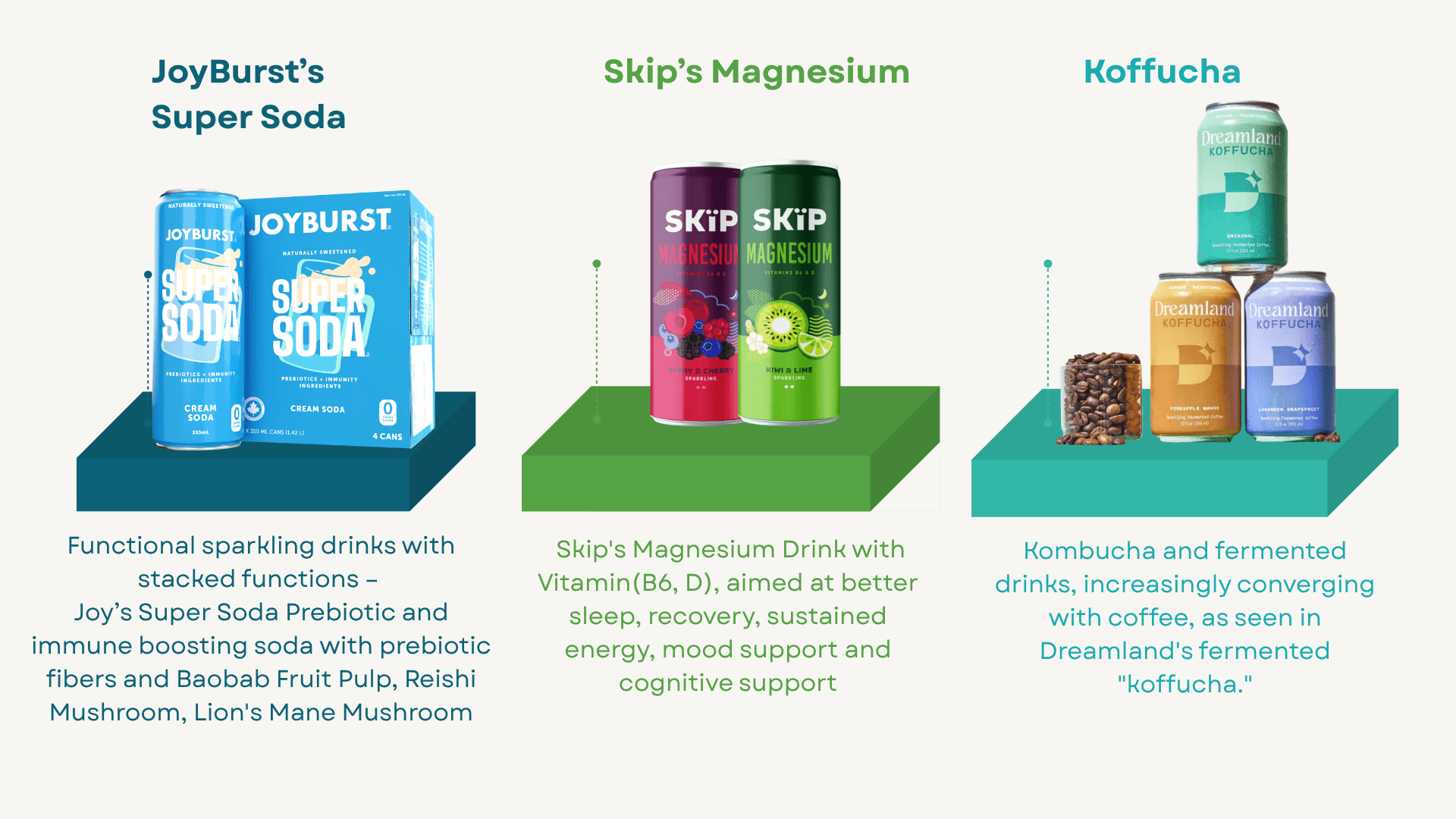
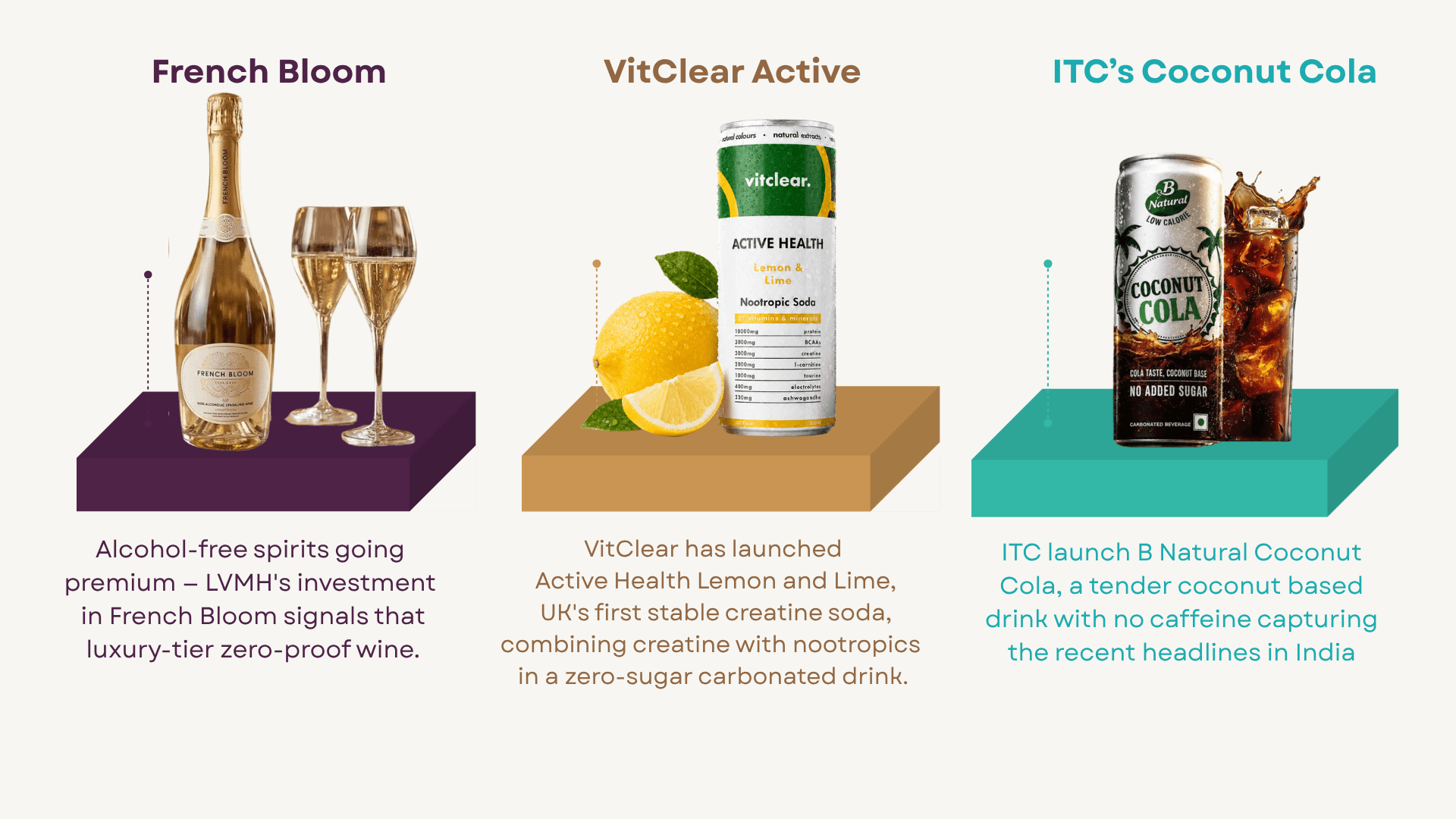
Brands are moving beyond single-benefit beverages towards more intentional, occasion-led products – combining function, flavour and format to meet specific moments and consumer needs.
The Innovation Challenge
Creating a truly differentiated non-alcoholic beverage is technically demanding in beverage R&D.
In our experience of formulating for multiple functional beverage brands, here are major challenges for a future-ready beverage to solve:
- Delivering layered flavour complexity
- Designing products to deliver sensory attributes in alignment with the emotional outcome
- Building satisfying mouthfeel and texture
- Maintaining ingredient stability within increasingly sophisticated functional systems
- Preserving bioactive efficacy across shelf life
- Achieving consumer acceptance without compromising taste
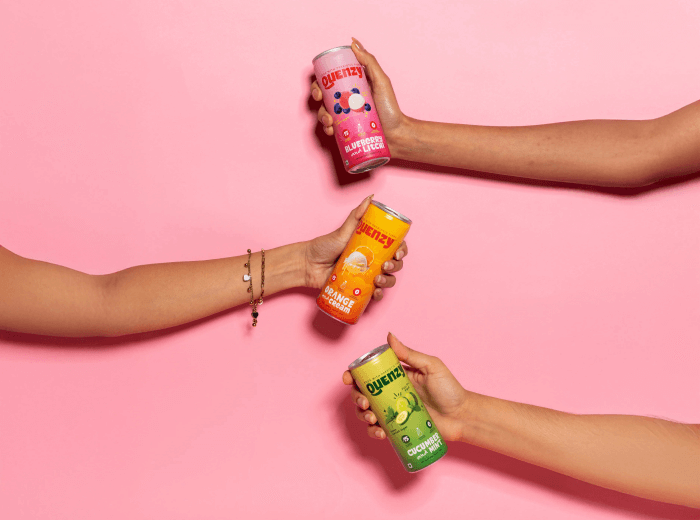
See how we brought Quenzy, new age functional beverage from concept to sold out launch. Read the full innovation story here : Quenzy Functional Beverage – Soda Fizz. Fun. Fibre. Reimagined. – Thinking Forks
On Our Radar: What Could Come Next
Beyond what’s already commercial
Thermal-Sequenced Flavour Release
Micro-encapsulation already exists commercially – popping boba, or flavour beads in gum and confectionery that rupture on a pH or pressure trigger. The next leap is encapsulation shells engineered to melt or dissolve at specific temperature thresholds, rather than on bite-force alone – so a single sip delivers flavour notes in a timed sequence as the liquid warms from fridge-cold to mouth-temperature.
Fermentation-on-Demand Pods
Gut-health and prebiotic sodas – the next leap can be a two-chamber can or bottle where a dormant probiotic culture pod ruptures on twist-open, and the drink is meant to be consumed within a defined “fermentation window” – say, 20 to 90 minutes – during which the live culture actively metabolises sugars in the liquid, shifting taste and carbonation in real time, marketed much like a coffee that “blooms.”
Where This Leaves Us
For new beverage product development, moderation movement is the catalyst for something bigger: beverages that are personalised, functional, emotionally relevant and scientifically designed for modern life. For us at Thinking Forks, that’s exactly where the opportunity lies and we’re already building for what’s next.