Around mid-January, as the sun completes its southern arc and begins its northward journey, the Indian calendar marks Makar Sankranti and Pongal. Astronomically, it’s a shift. Culturally, it’s a celebration. But from a food lens, it’s something far more deliberate.
This moment signals transition, longer days, rising activity, a slow release from winter’s holding pattern. And centuries before metabolism, circadian rhythm, Indian kitchens responded with intent, As daylight increased, food changed. Across regions, households adjusted what they cooked, how they cooked, and why.
In Tamil Nadu, this understanding comes alive early on Thai Pongal morning.
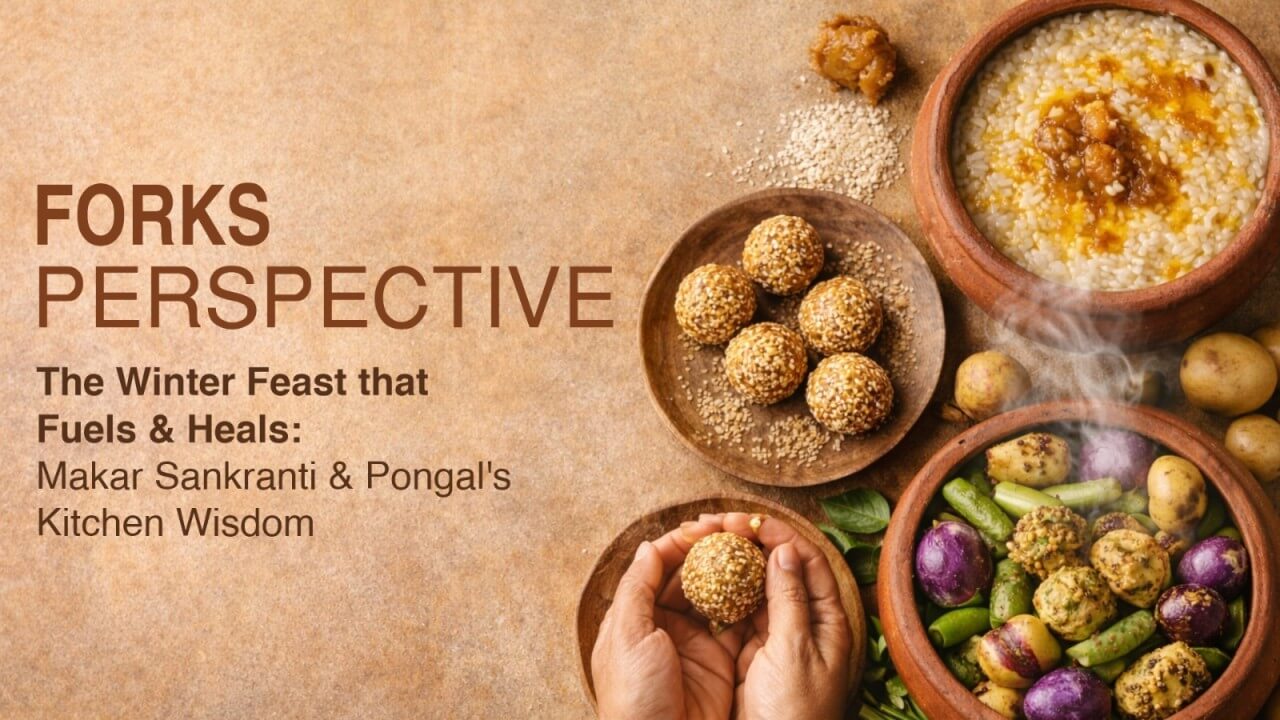
A clay pot sits over the fire, decorated with turmeric and ginger leaves. Newly harvested rice and moong dal simmer slowly in milk. As the grains soften, jaggery is added for sweetness and mineral depth, followed by generous ghee for richness and satiety. When the pot finally boils over, voices rise in unison “Pongalo Pongal!”
Inside that pot is sweet pongal, a dish designed for a body emerging from winter. Rice and moong dal provide balance gentle protein, easy carbohydrates, and digestibility when appetite is returning but digestion is still recalibrating. Moong dal, long favoured for being light and settling, allows nourishment without strain. Jaggery contributes iron and trace minerals, while ghee supports nutrient absorption and sustained energy.
The dish earns trust.
Travel west, In Maharashtrian homes, “Tilgul ghya, god god bola,” they smile, exchanging sesame-jaggery sweets.
The Til-Gud Code: Sesame Seeds: Dense with calcium (975mg per 100g, more than milk), magnesium, and zinc. Winter’s reduced sunlight means less Vitamin D synthesis, impairing calcium absorption. Sesame provides a highly bioavailable plant-based source.
Jaggery: Rich in iron (11mg per 100g) and potassium. It combats winter anemia naturally, while its mineral complexity prevents the sugar spikes of refined sweets. Together: They create a synergistic mineral matrix that strengthens bones, supports nerve function, and provides steady energy.
In Gujarat, Undhiyu emerges, a seasonal vegetable casserole so precise it reads like a farmer’s almanac. Every ingredient is at its winter peak: purple yam, baby brinjals, fresh beans. The muthiya (fenugreek dumplings) fenugreek is a proven blood sugar regulator. This is seasonal eating as precision medicine.
In Punjab, the night before becomes Lohri. Around bonfires, they pass rewri (sesame brittle) and roast peanuts. The peanuts provide protein and healthy fats; the fire provides community and Vitamin D synthesis encouragement as days lengthen. Sarson da Saag with makki di roti delivers iron, fiber, and corn’s eye-protecting zeaxanthin, crucial as sunlight intensity increases.
In Assam, Magh Bihu celebrates with pitha, rice cakes that are fermented, steamed, or baked. This fermentation isn’t just preservation; it’s pre-digestion, breaking down starches and creating natural probiotics for gut health during seasonal transition.
When Kitchens Outpaced Seasons
Modern kitchens changed faster than seasons ever did.
What’s emerging now is not nostalgia, but correction.
Across contemporary kitchens, ingredient choices are becoming more intentional. Heirloom or minimally processed rice is finding its way back into the Pongal pot. Cold-pressed sesame oil is replacing refined fats. Jaggery is being chosen for its source and method, These decisions reflect a renewed focus on ingredient behaviour and performance, rather than familiarity alone.
The same thinking is reshaping technique. Clay pots continue to earn their place for steady heat and gentle mineral interaction. Fermentation remains valued for its impact on digestibility and texture. Banana leaves are used beyond presentation, contributing subtle functional benefits during cooking and service. These methods persist because they solve real problems consistently.
Form, meanwhile, has been allowed to evolve. Til-gud appears as seed-based energy bars. Pongal is plated in layers rather than bowls. Undhiyu is batch-cooked and stored, capturing seasonal produce at its peak. In kitchens shaped by migration, grains may change, but the relationships between starch, fat, protein, and spice remain intact.
Some shortcuts revealed their cost. Speed replaced process. Convenience diluted depth. Eating became fragmented. The response has been quieter and more deliberate, foods returning to their place in the calendar, shared meals regaining value, and explanation re-entering the kitchen alongside instruction.
Seen through this lens, They functioned as adaptive systems, built to respond to climate, labour, digestion, and community constraints.
That is why they remain relevant.
Seasonal intelligence is about designing food that performs under changing conditions.
That’s the work we focus on at Thinking Forks, translating food wisdom into ingredient systems, product strategies, and formulations that hold up in modern kitchens and at scale.
If this way of reading food resonates with you, we’d love to continue the conversation. hello@thinkingforks.com | www.thinkingforks.com