Milk flows through the daily rhythm of life in India. It’s the first taste of nourishment many infants receive, the daily tonic promised for strong bones, and a sacred offering in our rituals. For generations, a simple glass of milk was the ultimate symbol of complete nourishment. Our grandparents didn’t need labels; their trust was in the timeless wisdom that this white elixir-built strength and vitality. The focus was straightforward: milk delivered essential protein, calcium, and nutrients in a natural, whole form. It was the original, uncomplicated health food sitting in our refrigerators.
But as our lives have sped up, so have our questions. We’ve moved from asking, “Should I drink milk in the morning or at night?” to a more complex inquiry: “How can I make milk work for my specific lifestyle and wellness goals?” This shift in questioning marks a new chapter in our relationship with dairy.
The Reinvention of the Classic Glass
This new question sparked a wave of innovation. We began to see milk not as a finished product, but as a blank canvas.
Think about the classic glass of milk: it offers a respectable 8-9 grams of protein. Good for another era, but often insufficient for today’s fitness-conscious generation seeking targeted results. This gap between tradition and modern need is where the great reinvention began.
We started customizing it.
- The Protein Power-Up: That same glass is now a potent recovery drink, delivering 20-25 grams of protein with a simple scoop of whey or plant-based powder.
- The Functional Elixir: We blend it into smoothies with fruits for antioxidants, nuts for healthy fats, and even specialized supplements for hair, skin, and gut health.
- The Format-Fluid Revolution: And for those who simply don’t enjoy a plain glass of milk, protein intake happens seamlessly through other dairy delights. A hearty bowl of curd (dahi), a serving of paneer in your sabzi, or the rich, creamy gravy of a butter chicken, dairy effortlessly integrates into our meals to ensure we meet our nutritional needs.
In essence, milk has been upgraded from a standalone nutrient to the foundational ingredient in our personalized wellness plans.
A Legacy of Natural Diversity: Our Dairy Heritage
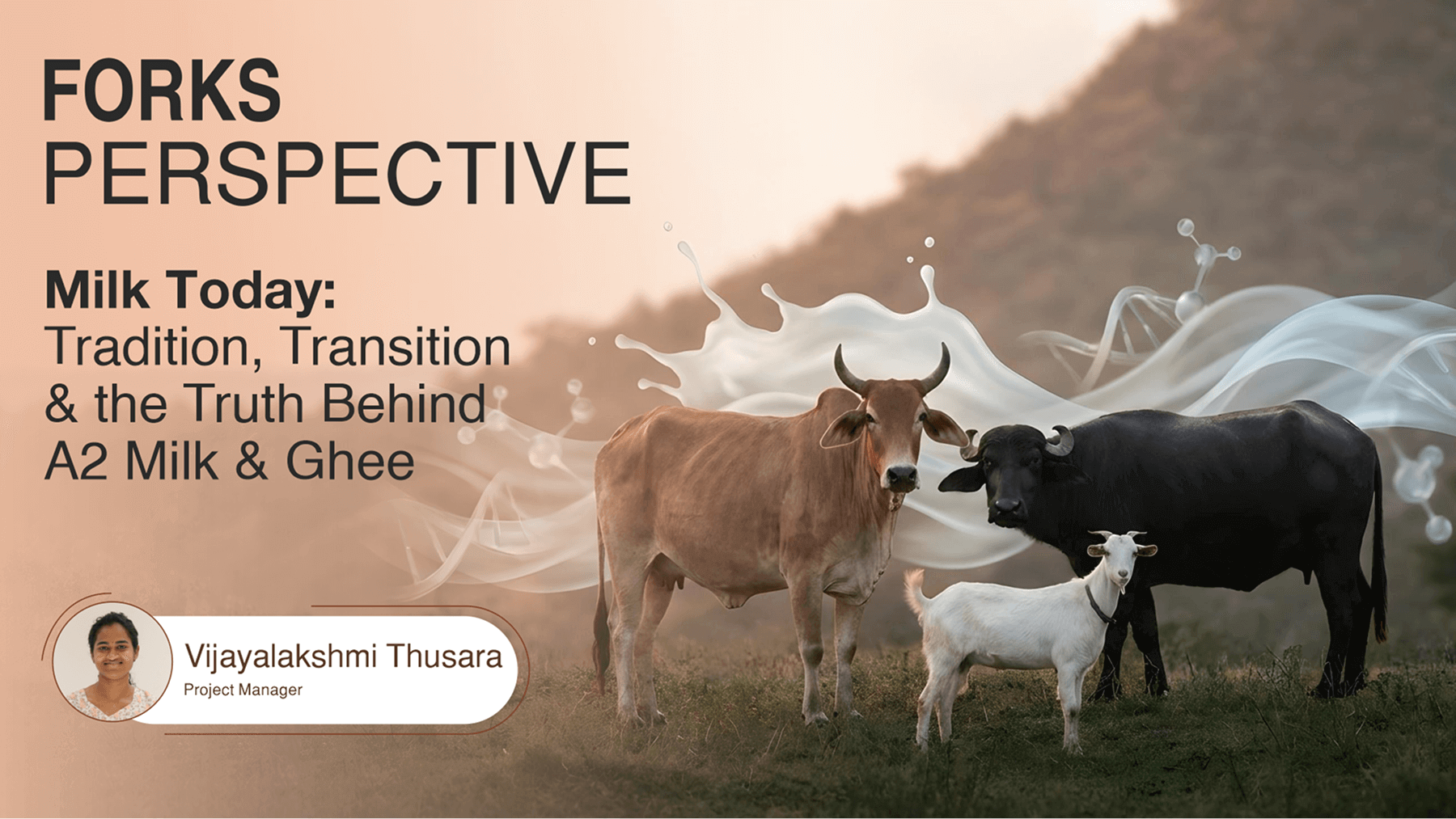
Before we engineered milk in our kitchens, nature had already perfected a stunning diversity. Long before “A2” became existent, our ancestors intuitively chose from a variety of milks, each with unique strengths shaped by the land and climate:
- Cow Milk: The balanced all-rounder, lower in fat and easier to digest for daily use.
- Buffalo Milk: The strength-builder, richer and creamier with more protein and calcium for sustained energy.
- Goat Milk: The gut-friendly choice, with smaller fat globules, often ideal for sensitive stomachs.
- Camel Milk: The resilient hydrator, traditionally used in arid regions for its unique proteins and vitamin C.
This rich heritage leads us to another timeless classic that has always represented concentrated, powerful nutrition.
Ghee: The Timeless Superfood, Re-examined
This transformation in how we view dairy isn’t limited to milk. Look at ghee, our golden elixir. Ghee is the ultimate example of concentrating milk’s benefits, a practice perfected by our ancestors.
By clarifying butter, we remove the lactose and casein, leaving behind pure, golden fat rich in butyric acid (for gut health) and CLA (for anti-inflammatory support). It’s a powerful, bioavailable energy source that fits perfectly into both ancient Ayurvedic practices and modern wellness regimes like the keto diet. Ghee represents a bridge, a traditional food that has effortlessly found its place in the contemporary health landscape.
The A2 Debate: Genetics Meets Market Demand
This journey from traditional staple to customized nutrients naturally brings us to the most debated topic in dairy: A2 milk. So, where does it fit?
The wave of A2 is a story of genetic methodology driven by escalating human demand.
Originally, many cattle produced what we now call A1 milk. But as consumption skyrocketed, farming practices intensified. Breeds were often pushed for higher, continuous output, which could impact their well-being.
In response, a shift in breeding focus took place. Through selective breeding, the genetics of native Indian breeds, like the Gir, Sahiwal, and Tharparkar, which never lost their A2 beta-casein protein, were highlighted and promoted. This genetic distinction is the core of the A1 vs. A2 conversation. When digested, A1 protein can release a peptide called BCM-7, linked to discomfort in some people. A2 protein avoids this issue, leading to smoother digestion. It was a change driven by the system to align with growing consumer awareness about digestion and sourcing.
Today, while a majority still consume regular milk without issue, a significant minority has switched to A2 for its perceived benefits, while others explore plant-based alternatives. This fragmentation in consumer choice is what’s now pushing science to the next frontier: lab-grown milk.
The Final Choice: A Return to Roots
We are now left with a fundamental choice in the dairy aisle. And the most empowering choice might be the one that aligns with a simple, powerful truth.
Reflect on this: For decades, “processing” happened outside the animal. We took pure milk and added powders and supplements after it was produced. This was customization in our kitchens.
The modern shift, however, is more profound. We are increasingly offered products that come from a system where the “optimization”, through selective breeding or feed happens inside the animal.
There is a critical difference here.
The purest, most time-tested choice remains the one that has always been best: milk in its least interfered with state, from healthy animals raised naturally. Whether you choose the classic glass, a spoonful of ghee, or seek out native A2, the principle is the same. Opt for the product that comes from a system you trust, with transparency and minimal industrial manipulation.
In a world of complex modifications, the traditional wisdom of “less is more” holds the key to true, mindful nourishment.
Pick the one that’s always been the best. Your body will thank you for it.