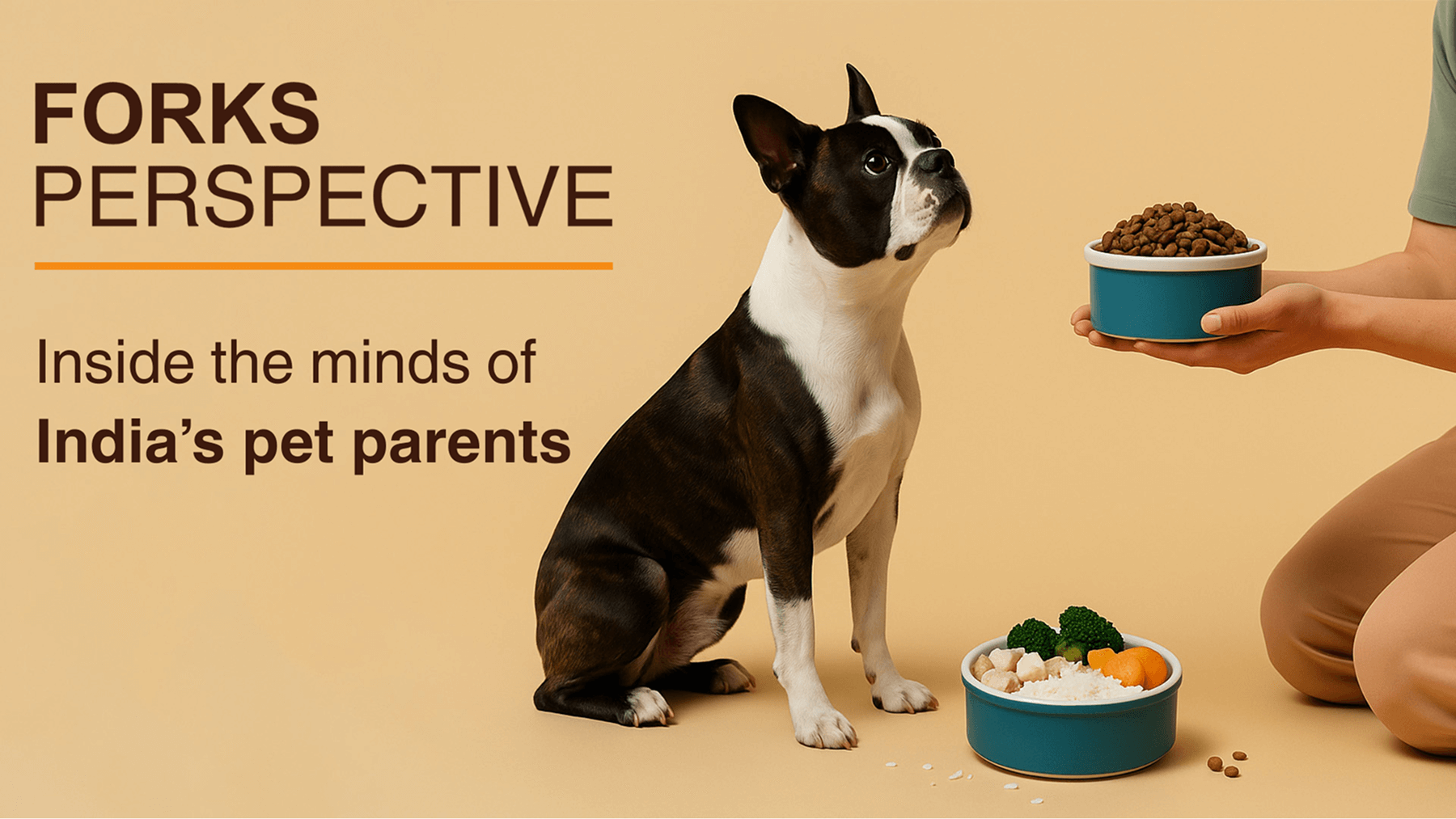
India’s relationship with pets has evolved far beyond companionship it has slipped into the emotional core of households. A huge share of today’s parents are first-timers, a trend accelerated by pandemic-era adoptions, and nearly seven out of ten say their pet is the most important part of their lives. That kind of devotion changes how a country spends, behaves, and learns. It pushes people to treat nutrition, hygiene, and care with the seriousness usually reserved for children, fueling a market projected to grow from USD $700 million in 2023 to over USD $1.5 billion by 2027. And Indian pet parents are doing exactly that.
Food became the first reflection of this shift. By 2022, almost 75–80% of what households spent on pets went to food and treats, not services, not accessories, not toys. The bowl is the centre of their decision-making. And the bowl itself has upgraded: from basic, grain-heavy diets to high-protein, functional, carefully formulated meals featuring novel proteins like salmon and duck. Parents want natural ingredients, they want organic options, and they’re willing to pay for better quality because they’re no longer feeding for fullness, they’re feeding for health, prevention, and longevity.
Even then, the Indian kitchen still has a seat at the table. Around 65% of parents now follow a hybrid model: part homemade, part packaged. A mix of comfort and precision. Veterinarians strong influencers often become the tipping point for shifting families from traditional chapati-rice mixes to more structured nutrition. And as trust in commercial food grows, so does the understanding of what a diet can actually solve: gut issues, coat dullness, urinary discomfort, picky eating, even behaviour and anxiety.
You can already see the ripple effect in real homes. Parents talk about fewer stomach upsets, calmer pets, shinier coats, and predictable energy cycles. And when results are visible, people share, recommend, and refine. The community, both offline and in dedicated social media groups, accelerates the shift.
Adoption, too, is rising at a pace we didn’t see a decade ago, with Indian Desi (stray) breeds gaining unprecedented acceptance as family pets. Pets brought structure, stability, and emotional grounding into lives that felt stretched. You’ll hear of young professionals who now sleep early, keep their phones aside by 10 PM, and wake up at sunrise because the morning walk with their dog has became the anchor their lifestyle was missing. You’ll meet a woman who struggled with anxiety but found rhythm through her cat, meal times, grooming moments, quiet companionship. These emotional wins aren’t small; they reshape daily life, and they increase how much parents are willing to invest.
But every shift carries its challenges. Cost sensitivity still dominates smaller towns. Ingredient literacy is still developing, with debates over grains versus grain-free reflecting global concerns. And trust, especially in a world of marketing noise, is fragile. Vets often become the single most reliable voice, which is why their recommendations heavily influence both food choices and brand loyalty.
Different households navigate these challenges in their own ways, and their meal choices say a lot about what they value.
Value-driven families still anchor their routine in home-cooked meals: rice, chicken, eggs, curd, simple broths, supported by basic packaged kibble. They’re looking for dependable nutrition, satiety, and cost stability. Nothing fancy. Just food that works.
Brand-loyal but discount-conscious homes usually stick to mid-range kibble or wet food from labels they trust, often buying in bulk during e-commerce sales. When budgets stretch, they mix in toppers, gravies, or occasional treats. Their priority is digestive comfort, skin–coat improvement, and predictable quality, at the best price they can find.
Time-poor professionals gravitate toward complete commercial meals: premium kibble, fresh-cooked subscription packs, gently cooked wet meals, and veterinary-recommended formulas. Convenience is everything, so they look for “no-guesswork nutrition”, balanced meals, consistent digestion, and minimal prep.
Experience-oriented urban families build pet diets like wellness plans. Think grain-free variants, joint-support blends, breed-specific kibble, hydrolysed protein diets for allergies, customized fresh bowls, functional treats for gut/skin/weight, and supplements like omega-3 and probiotics. They want visible outcomes, shiny coats, better mobility, calmer behaviour, fewer allergies, cleaner gut health, and they’re willing to experiment to get there.
Across all these groups, a new vision for treats is emerging: they are becoming precision-delivery systems for wellness and sensory enrichment. The future lies in leveraging this daily ritual for targeted, non-invasive solutions. Imagine eco-friendly, protein-rich chews made from crickets or upcycled ingredients that leave no trace. Envision biodegradable, slow-licking mats infused with calming pheromones to ease Diwali anxiety, or “hydrogel” treats that combat dehydration in the summer heat. The next frontier includes “situational boosters”, pre-walk bites with natural electrolytes, or senior pet bites with cognitive support. Soon, the humble treat could evolve into an edible diagnostic strip for early disease detection or a vehicle for stress-free oral vaccines, transforming a moment of indulgence into a powerful act of proactive, consumable care.
The same mindset extends to hygiene, oral health, paw care, ear cleaning, tick and flea management, home disinfectants, urinary tract prevention. Homes now have entire shelves dedicated to pet wellness, almost mirroring human skincare and health routines.
Clinics feel the impact too. Parents visit earlier, not later, for routine check-ups and vaccinations. They ask better questions. And a larger share of their spending is shifting from emergency resolution to proactive care, including insurance. Prevention is becoming mainstream.
All of this places brands in a rare position. Parents are curious, hungry for education, and open to quality, but they expect honesty. They want to know why an ingredient matters, what a formulation solves, how to combine homemade and packaged food safely, and how diets should change as pets age. They want choice without confusion, science without jargon, and transparency without theatrics.
Which means the opportunity is massive. There is room for premium formulations tuned to Indian conditions and prevalent allergies, diets crafted for Indies as much as pedigrees, hybrid feeding solutions that blend home-style familiarity with scientific precision, and educational frameworks that make nutrition simpler for every family segment, from the cost-conscious towns to the wellness-led metros.
If brands can meet these parents with sincerity, clarity, and innovation, India’s pet-care industry won’t just keep growing, it will redefine how the country nurtures its most emotional relationships.