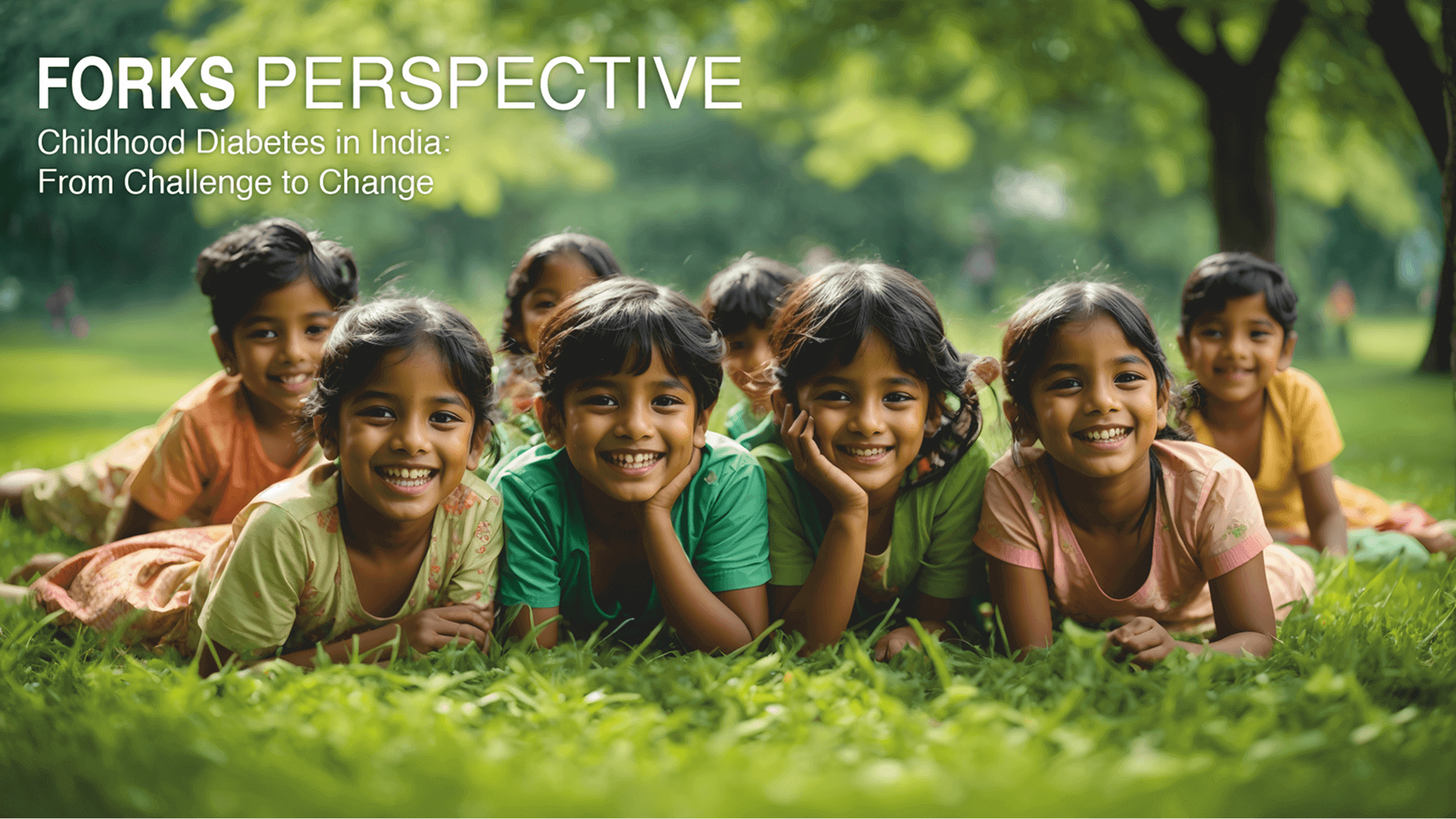
Today’s children are growing up in a world full of choices whether it’s in food, in lifestyle, in habits that are contrastingly different from their previous generations. Amongst these changes, a small but growing number are also learning to live with diabetes. For most, it’s not about restriction, but about awareness, knowing how their bodies respond, how food fuels them, and how balance shapes their energy and growth.
What often goes unnoticed is that nearly one lakh children in India live with Type 1 diabetes, and many more teens are now being diagnosed with early Type 2, As per the Comprehensive National Nutrition Survey (CNNS), the prevalence of pre-diabetes/diabetes was 12.3% and 8.4% among adolescent boys and girls in India, respectively. In 2024, India had the highest number of children and adolescents aged under 20 who were living with type 1 diabetes, with around 301,000 cases.
These figures reflect increasing detection and monitoring and they also underline the importance of early, continuous care. With the right routines, awareness, and support, children with diabetes can lead lives just as active and fulfilling as their peers.
The conversation around childhood diabetes is shifting. Doctors, schools, and families are beginning to treat it as a condition that can be managed through thoughtful balance between food, activity, rest, and treatment.
Measures Strengthening Diabetes Care in Children
- Child-friendly monitoring tools that make daily tracking less stressful
- Improved access to insulin and essential supplies
- Better-equipped government hospitals, especially supporting families from economically weaker sections
- Community programmes that help families learn, share experiences, and support each other.
- NGO’s offering medical and psychological support to children and caregivers.
State-Level initiatives strengthening Childhood Diabetes Care across the country:
- In West Bengal, a government-model programme (“Integrated Care for Type 1 Diabetes”) uses existing non-communicable disease (NCD) clinic infrastructure under the National Health Mission to treat children/adolescents with T1D: dedicated clinics, free insulin & monitoring devices, registry.
- In West Bengal UNICEF is partnering with the state health department to build a PHC‐oriented model for juvenile diabetes and other childhood NCDs (focusing on staff training, referral systems, and community awareness).
- In Tamil Nadu, an SOP (Standard Operating Procedure) is planned (June 2025) for children with T1D: dedicated support systems, trained staff, nodal officers, integration help-lines aimed at timely and continuous care.
NGO Networks Enabling Childhood Diabetes Care:
- Udaan : https://www.udaankids.org/
- Focus: Supporting children with T1D in low‐resource settings, creating a full ecosystem (medical care + education + psychosocial support).
- Key services: Free medical care (insulin, consumables), structured diabetes education for children/families, advocacy for inclusion in school/child health programmes.
- Reach: Over ~1,200 families (per their website) across many villages.
- Idhayangal Charitable Trustidhayangal.org
- Based in Tamil Nadu, India. Focus: Under-privileged children with T1D needing insulin, consumables, pumps, and follow-up.
- Services: Provide insulin cartridges, test strips, insulin pumps & consumables, support infrastructure (free fridges for insulin storage), emergency support.
- Reach: Lists support to “approximately 3,000 children pan-India” for T1D, significant consumables distribution.
- Type 1 Diabetes Foundation of India https://www.t1dfindia.org/
- Focus: Education, engagement and advocacy initiatives for people (including children) living with T1D in India.
- Services: Community building, support groups, advocacy (focussed more on broader community & policy).
- United World Against Diabetes : https://diabetesfreeworld.org/
- A non-profit with reach in 17 states of India, including rural and remote settings, doing advocacy and support for children with T1D.
- They specifically mention providing medicine, testing kits and education to under-privileged children in tribal areas.
How food & health brands are responding to children diabetes:
Food companies are also aware of the growing number of cases of children with diabetes and hence are working towards formulating their products better to support this condition. Thoughtfully crafting food products with emphasis on complex carbohydrates, protein, fibre and micronutrient value, to make everyday choices easier for parents. Increasing awareness of the different types of Millets available in India and how those can be used to develop high protein and high fibre flour is a significant step in this direction. Multiple digital health platforms are helping families track meals, glucose readings, and doctor visits more smoothly.
Research from the Yale School of Medicine suggests that in cases of early Type 2 diabetes, improving insulin sensitivity can significantly improve and in some instances, partially reverse the condition. The landmark work by Gerald Shulman and Kitt Petersen, MD, showed that even a modest weight reduction of around 10% can help restore insulin sensitivity.
This does not apply to every case, but it reinforces an important message: early awareness and consistent lifestyle support can change the trajectory of Type 2 diabetes in children.
Childhood diabetes may be a prolonged condition, but it doesn’t define a child’s life. What we’re seeing across India – from government care systems and NGO initiatives to families embracing healthier habits is a quiet but powerful shift toward empowerment. With early diagnosis, the right & consistent medical care, a nurturing environment that encourages confidence in day-to-day activates, a child with diabetes can do everything any other child does – study, play, grow, learn and imagine their future without restriction.
The aim is not to fight diabetes everyday but to live well with it – with stability, dignity, and joy intact.