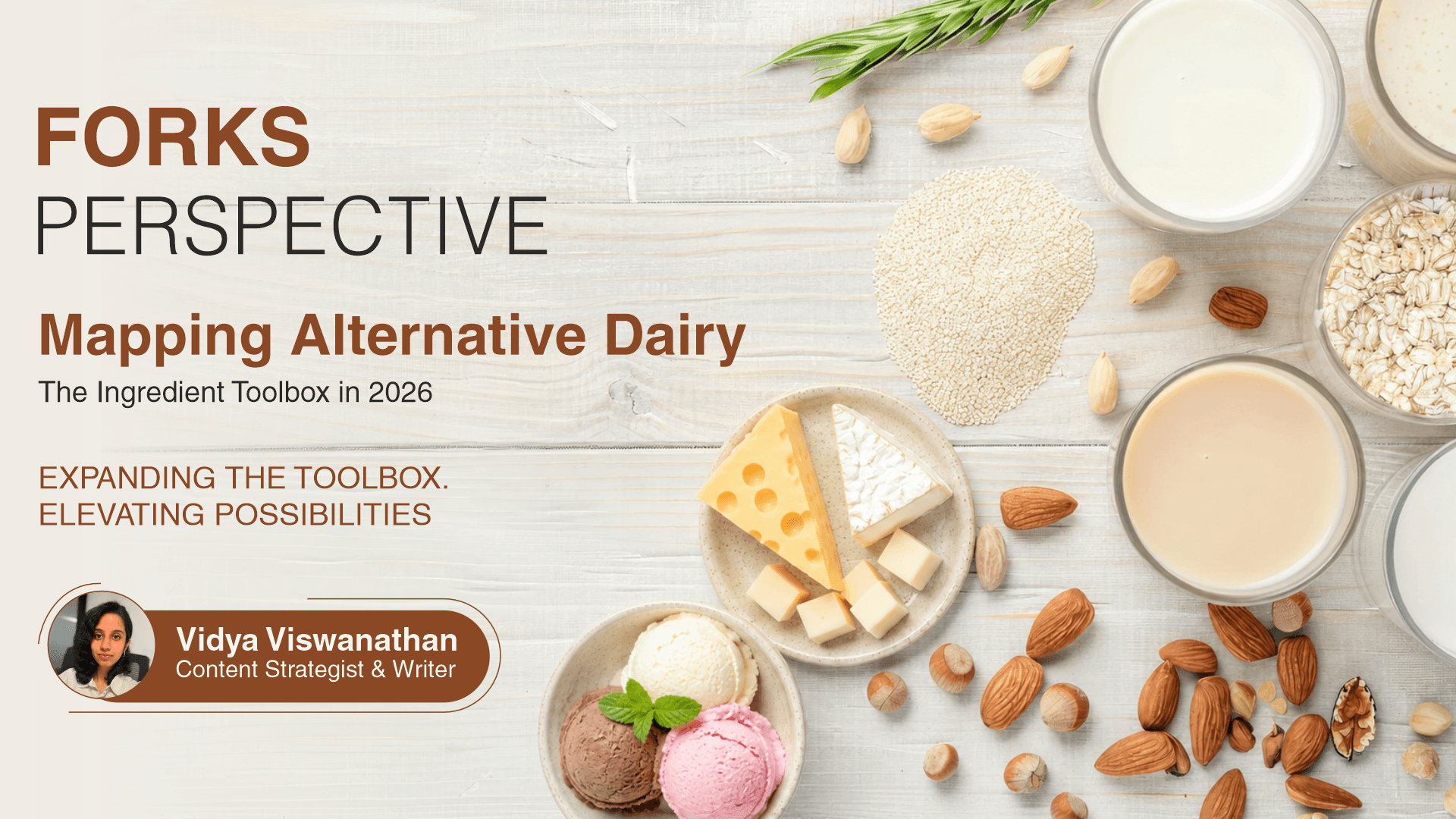
Not long ago, plant-based dairy was largely a story of choosing the right plant base – oat, almond, soy or coconut. Today, the ingredient toolbox is getting much bigger. From emerging plant proteins and fermentation to precision-fermented casein, each new platform is tackling a different piece of the dairy puzzle.
The question we are asking is no longer: what replaces dairy?
It’s what can the ingredient do?
RISING PLANT PLATFORMS
Moving beyond the established, to diversify sources
- Fava beans: High protein, emulsifying & gelling → high-protein milk, yogurt, cultured alternatives, oat blends(protein, functionality)
- Pistachio: Distinctive flavour and naturally occurring lipids → premium, creamy beverages and clean-label dairy-alternative formulations
- Tiger Nut: Natural fats + fibre → creaminess, body and smooth texture in plant-based beverages and dairy alternatives.
- Upcycled Barley: Protein-rich ingredients recovered from spent brewing streams → milk alternatives, protein beverages & other dairy-alternative formulations
- Potato: Gelation, viscosity and texture tuning; potential for upcycling potato-processing streams → yogurt and cheese alternatives
- Chickpea: Protein, gel-forming & fermentation-friendly → milk, yogurt & kefir
- Sunflower: Emulsification, foaming and oil-binding functionality; upcycling potential → vegan butter/spreads, cheese alternatives, frozen desserts
- Lupin: High protein, emulsification and texture-building potential → milk, yogurt and fortified protein beverages
In practice:
- In 2026, Planteneers introduced a plant-based high-protein drink from its fiildDairy NEB series, combining fava bean and pea proteins to deliver 6% protein (≈15 g per 250 mL). The concept is designed for high-protein beverages and can also serve as a basis for meal-replacement drinks. This shows how emerging plant proteins are becoming formulation tools, not just alternative sources.
- Táche (Pistachio Milk): A pioneer in the pistachio space – formulates its Barista Blend to be completely free of added vegetable oils or fillers. The milk relies entirely on the natural, rich fats of the pistachio itself to emulsify and create a stable foam.
Innovation opportunity: “What other plant proteins can give us better nutrition and functionality?”
FERMENTATION & MICROBIAL PROTEINS
Using fermentation to improve plant-based systems – while opening the door to new protein sources
- Fermented plant proteins (oat, pea, soy, fava, chickpea): Flavour, digestibility & texture optimisation → yogurt, kefir, cultured cream & fermented beverages
- Mycoprotein / fungal protein: Protein-rich, structured biomass with fermentation-derived functionality → emerging applications in dairy-alternative systems
- Yeast protein: Fermentation-derived protein with high protein density and functional potential → protein powders & protein beverages
- Microalgal protein: High protein density, emulsification & water-holding functionality → emerging milk, yogurt & cheese alternatives
In practice: In 2026, Angel Yeast introduced AngeoPro S80-A, a clear yeast protein with ≥80% protein and high solubility, enabling transparent high-protein beverages. It illustrates how fermentation is expanding the alternative-dairy protein toolbox beyond conventional plant proteins.
Innovation opportunity: “How do we improve the taste, texture and digestibility of plant proteins while unlocking microorganisms as new sources of dairy-alternative protein?”
FRONTIER DAIRY FUNCTIONALITY
Recreating the proteins that give dairy its functionality, without the cow.
- Precision-fermented casein: Melt, stretch, gelation & emulsification → animal-free cheese & next generation dairy applications
- β-Lactoglobulin: Solubility, foaming & emulsification → protein beverages, ice cream & dairy alternatives
In practice: In 2026, Formo and NewMilkBuzz submitted recombinant αS1-casein to the FDA’s GRAS review, signalling another step toward potential US commercialization. The proposition is fundamentally different from plant protein: recreate the specific dairy proteins responsible for functionality.
And the application is already moving beyond theory: At IFT FIRST 2026, Standing Ovation demonstrated its precision-fermented Advanced Casein in a gelato at 2–3%, where it contributed texture and creaminess alongside plant-based fibers.
Innovation opportunity: “Can we recreate the specific dairy proteins responsible for functionality?”
ESTABLISHED AND EVOLVING
Established ingredients with evolving formulations
Oat | Soy | Almond | Coconut | Cashew | Pea
In practice:
- Kite Hill’s 2026 Protein Cream Cheese Alternative combines almond milk and soy with fermentation and culturing to deliver double the protein of leading dairy cream cheese. Established plant bases are being re-engineered to add new value to familiar formats.
- Amano Enzyme’s PG500, a protein-glutaminase, improves solubility of almond, pea, soy, and rice proteins at pH levels as low as 4.5 – preventing curdling in hot, acidic coffee and improving foam stability for barista-style drinks, without added phosphates.
Innovation opportunity: “How do we make existing dairy alternatives better?”
CROSS-PLATFORM SYSTEMS
The next step is no longer choosing one platform but assigning different jobs to different ingredients.
- Plant + fermentation (e.g. fermented oat or legume bases) → improved flavour & texture in yogurt-style applications
- Plant + microbial protein (e.g. pea + yeast protein blends) → emerging routes to higher-protein dairy-alternative formulations
- Plant + precision-fermented dairy protein (e.g. plant ingredients + casein) → dairy-like functionality in next-generation cheese & dairy alternatives
In practice: New Culture’s animal-free mozzarella formulation combines precision-fermented αS1-casein with plant oils and other non-dairy ingredients – illustrating how next-generation dairy alternatives can assign different functions to different ingredients, rather than asking a single platform to replicate the entire dairy experience.
Innovation opportunity: “Can we combine complementary platforms to build better dairy alternatives?”
The future of dairy alternatives isn’t oat or pea or precision fermentation – in our view working in food research and development day in and out, it’s knowing when to use each and when to combine them.
As the toolbox expands, the edge belongs to those who master the combinations for the best output, not just the ingredients.
The bigger opportunity is moving beyond single-platform optimisation: figuring out which combination solves your specific gap -taste, cost, functionality, nutrition, sustainability or speed to shelf.
Looking to build in the dairy alternative space? Let’s talk.
Reach out to us at www.thinkingforks.com